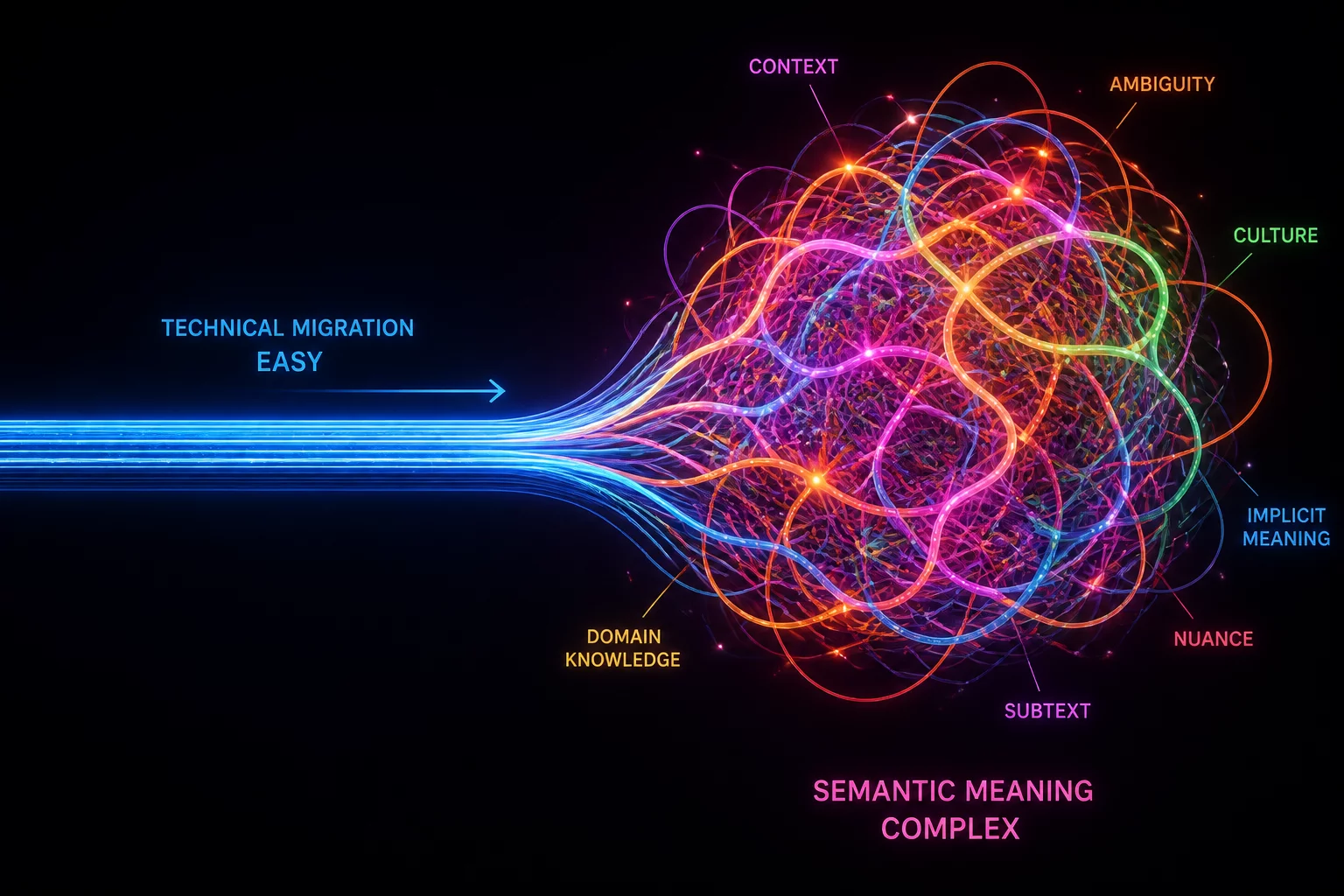
A database migration is only truly successful when the destination data preserves the same business logic and context as the source. Technical tools ensure the bits arrive, but semantic engineering ensures those bits still mean what they were supposed to mean to the users. In many modern environments, we rely on high-speed migration pipelines that promise zero downtime, yet they rarely address the subtle drift in how fields are interpreted by downstream systems.
The Technical Mirage of Success
Engineers often focus on throughput, latency, and row-count validation. If the source has one million rows and the target has one million rows, the CI/CD pipeline turns green. However, this technical success masks a dangerous reality: semantic drift. During a recent infrastructure overhaul at a major logistics firm, the technical team successfully moved 4TB of transactional data in record time. The logs showed zero errors. The validation scripts confirmed data types were correct. Yet, within forty-eight hours, the finance department reported that quarterly projections were off by 15%.
The Ghost in the Schema
The issue wasn't the data transfer itself, but a shift in the interpretation of a single column: fulfillment_status. In the legacy database, a status of '4' meant 'shipped but not invoiced'. In the new consolidated schema, '4' was remapped to 'returned'. The technical migration script handled the remapping correctly as a value, but the BI dashboards—unaware of the schema documentation—continued to sum up all '4' values as positive revenue streams. This is the definition of semantic failure: the data is technically valid but functionally wrong.
Managing Downstream Impact
When a schema changes, the ripple effect extends far beyond the database server. It hits APIs, reporting layers, and even automated machine learning models. To combat this, engineering teams should follow these strategic steps:
- Perform semantic audits before and after the data load to verify business definitions.
- Implement data lineage tracking to see which BI tools consume specific tables.
- Create shadow tables where new and old schemas run in parallel for a cooling-off period.
- Document all domain logic changes in a shared catalog that is accessible to both developers and analysts.
- Run automated integration tests that check for expected business values rather than just row counts.
Conclusion
We must stop treating database migrations as purely structural events. They are communicative events. The tables we build carry the intent of the business, and when we move those tables, we risk losing that intent. By prioritizing semantic clarity alongside technical performance, we ensure that our data systems remain a source of truth rather than a source of confusion. The next time you plan a migration, ask yourself not just how long it will take, but what the data will mean when it arrives.
Comments & Discussion
Chris
05/12/2026Meaning is always the hardest part. I've seen teams celebrate a successful sync only to realize the data science team's models are now hallucinating because a category ID shifted.
Leave a message