The Philosophy of Precise Documentation
TableReason Case Files serves as a specialized repository for database engineering documentation. We move beyond simple change logs to provide a deep architectural context for every schema evolution.
In modern software development, database changes are often the most consequential decisions made by a team. Yet, the reasoning behind these changes—the "why"—is frequently lost in commit messages or outdated documentation. TableReason bridge this gap by documenting the lifecycle of data structures with technical rigor.
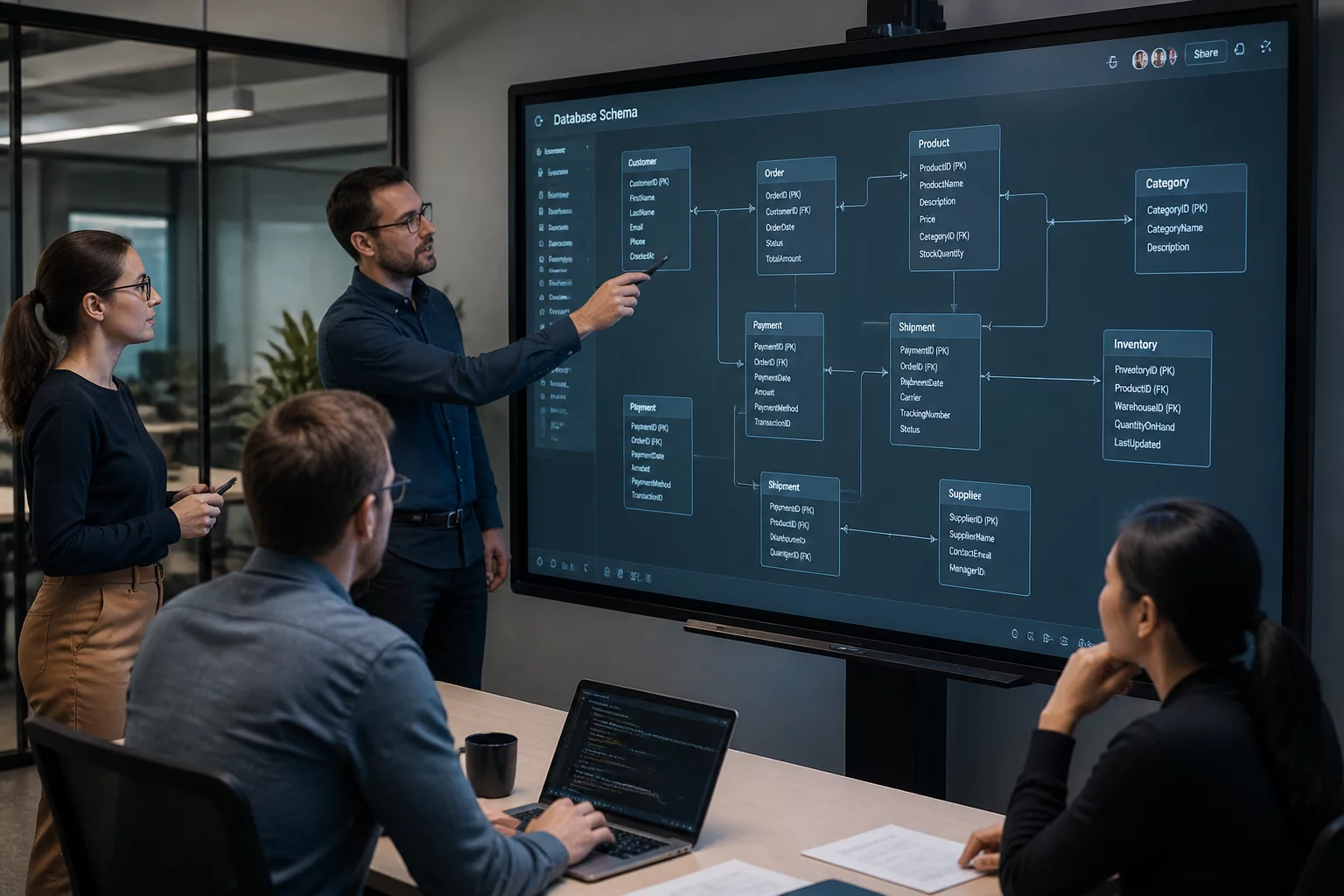
Our Mission
To provide engineering teams with a clear, immutable record of database architectural decisions, ensuring that every table modification is understood, analyzed, and mapped against its downstream consequences.
Architectural Clarity
We focus on the structural integrity of data. Every case study breaks down complex migrations into readable, logical components.
Impact Analysis
A schema change never happens in isolation. We map how data modifications affect downstream services, APIs, and analytics.
Technical Integrity
Our documentation is written for engineers, by engineers. We use precise terminology and real-world implementation scenarios.
Our Methodology
How we document the complex world of database engineering.
1. Structural Discovery
We analyze the current state of the database, identifying bottlenecks, redundancies, and areas where the existing schema no longer supports the business logic.

2. Dependency Mapping
Utilizing our impact analysis frameworks, we trace all foreign keys, view dependencies, and stored procedure calls to ensure a safe transition pathway.
// Impact Analysis Trace
SELECT dependency_name
FROM system_catalog
WHERE object_id = 'table_alpha_v2';
3. Final Case Publication
The results are compiled into a comprehensive Case File, including before/after diagrams, migration scripts, and post-deployment validation steps.
Explore Published FilesBuilding a Smarter Data Foundation
TableReason Case Files is more than a project; it is a commitment to the engineering community to elevate the standards of data architectural documentation.