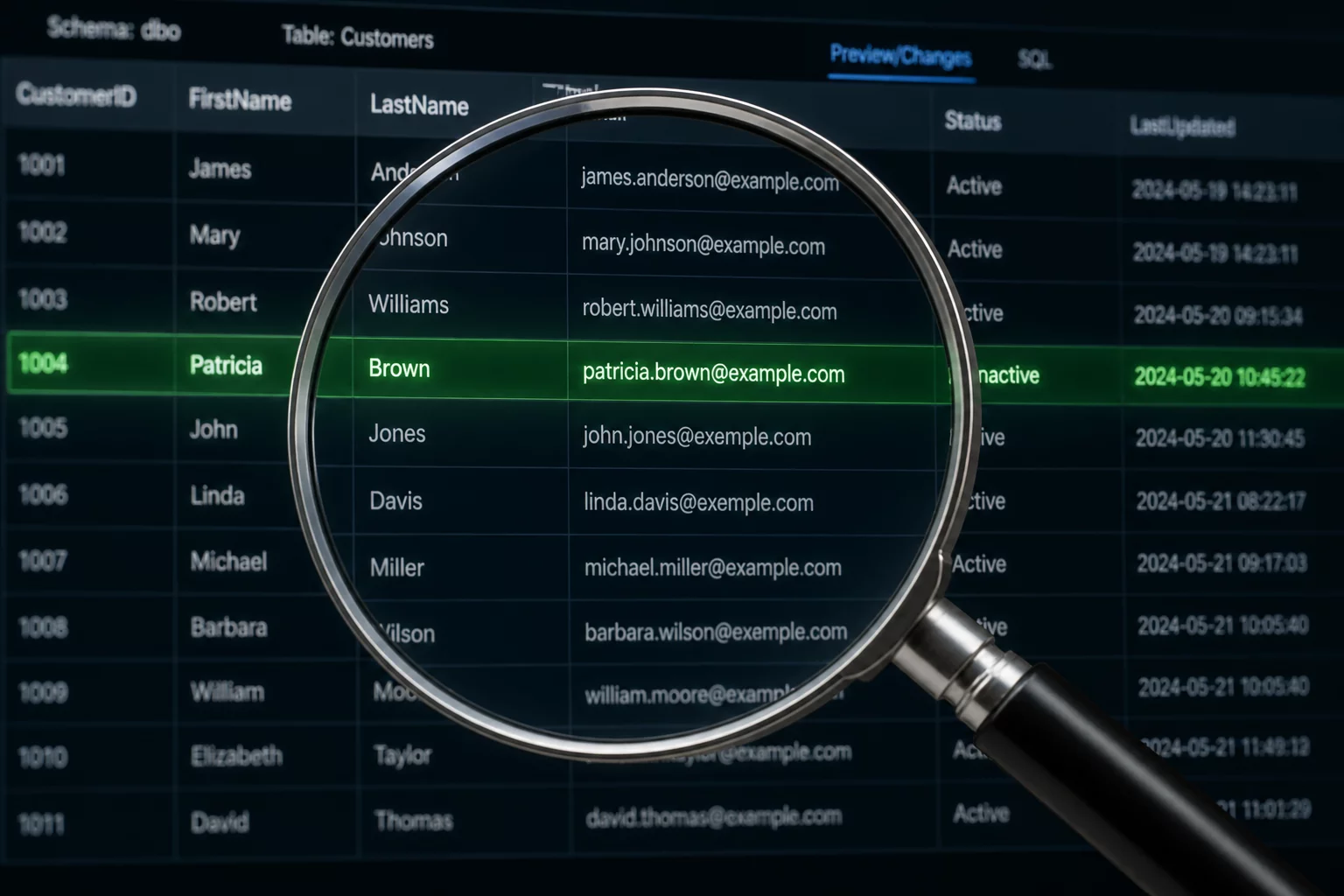
Effective table change review in pgAdmin involves moving beyond simple SQL execution to a structured evaluation of how schema modifications affect downstream applications, BI tools, and data integrity. While the pgAdmin interface provides a powerful GUI for direct manipulation, the lack of built-in version control or impact visualization often leads to unforeseen breakages in production environments.
The Challenge of Manual Changes in pgAdmin
Developers frequently use pgAdmin for quick fixes or schema exploration because it offers immediate feedback. However, this convenience often bypasses the standard code review pipeline. A team might add a column to a high-traffic table, unaware that an external reporting tool performs a 'SELECT *' and will now fail due to unexpected data types or memory limits. This isolation of the database layer from the application layer creates a significant risk for enterprise systems.
Assessing Downstream Impact Before the 'Commit'
A robust review process requires generating the SQL script from pgAdmin and analyzing it against a map of system dependencies. Instead of relying on memory, teams should use automated tools to trace which APIs and services consume the modified table. Documentation within the pgAdmin 'Comment' field for each table and column serves as a first line of defense, but it rarely suffices for complex migrations involving foreign keys or partitioned tables. Every change must be evaluated for its potential to lock tables or degrade query performance during peak hours.
Best Practices for Collaborative Schema Reviews
Shared ownership of the database schema means that no change happens in a vacuum. Teams should adopt a workflow where pgAdmin is used for drafting, while the final implementation is handled through a migration tool that supports peer review. Storing the SQL generated by pgAdmin in a shared repository allows for historical tracking and easier rollbacks. This approach ensures that every engineer understands the why behind a change, not just the what, leading to a more resilient and transparent data architecture.
Comments & Discussion
Admin
08/01/2026Updated to reflect pgAdmin 4 v9.17 release.
Leave a message